Southern California homeowners know earthquakes are part of life here. After the shaking stops, one of the most important things to check is your gas system. Strong shaking can crack pipe, loosen fittings and pull appliances away from their connections. Here is what to look for and what to do.
If you smell gas, hear hissing or see damage to a gas line after a quake, get everyone out of the house and call 911 or your gas utility from a safe place. Do not use phones, light switches or anything that could spark while inside.
Right after the shaking stops
Once it is safe to move, check on everyone in the house first. Then, before turning anything on or lighting anything:
- Smell for gas. A rotten egg or sulfur smell means gas is escaping.
- Listen for hissing. Pay attention near appliances, the meter and exposed pipe.
- Look for damage. Check for appliances that have shifted, broken pipes or a meter that is tilted or damaged.
Ready.gov’s earthquake guidance also recommends checking for gas leaks and other damage after the shaking stops.
When to shut off your gas
Shut off the gas at the meter only if you smell gas, hear hissing or see damage that could be leaking gas. If none of these are present, there is usually no need to shut it off.
This matters because once the main shut-off at the meter is closed, the gas company typically has to turn it back on and relight pilots. After a large earthquake, utilities can be overwhelmed with calls, and homes that shut off gas without need may wait days to get it back.
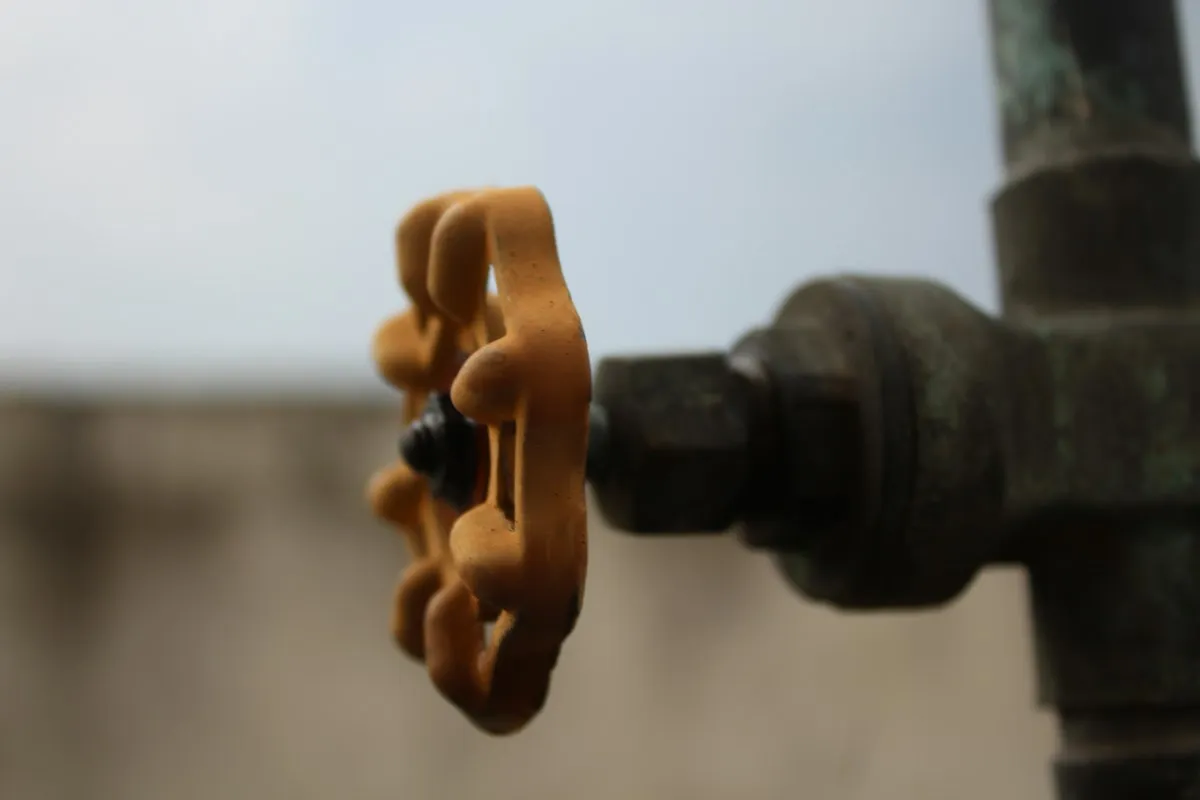
To shut off gas at the meter, you need a wrench. The shut-off valve is on the pipe coming out of the ground before the meter. Turn it a quarter turn so the tab runs across the pipe instead of along it. Keep a wrench near the meter so you are ready.
Appliances that moved during the quake
Water heaters, ranges and dryers can shift during strong shaking. If an appliance moved, the flexible connector behind it may be strained, kinked or pulled loose. Even if you do not smell gas right away, have the connection checked before using the appliance.
Water heaters are especially important. California requires water heaters to be strapped so they do not tip over in a quake. A water heater that falls can break its gas line and its water lines at the same time.
How seismic gas shut-off valves work
A seismic gas shut-off valve, sometimes called an earthquake valve, is installed on the house side of the gas meter. During strong shaking, a mechanism inside the valve trips and closes it, stopping gas from flowing into the house. It works even when nobody is home.
California requires seismic gas shut-off valves sold in the state to be certified, and some Southern California cities require one when a home is sold or remodeled. Our earthquake gas shut-off valve page explains installation.
If your seismic valve has tripped
If the valve closed during a quake, gas to your house is off. Do not reset it until the house has been checked for leaks. The valve closed because the shaking was strong enough to possibly damage your piping. Resetting it without a check could send gas into a broken line.
Once the system is checked, the valve can be reset and every pilot light has to be relit.
Why a pressure test matters after a quake
A gas detector and your nose can find obvious leaks, but small cracks or loosened fittings inside walls may not be noticeable right away. A pressure test checks the whole system. The piping is closed off, filled with air and watched on a gauge. If pressure drops, there is a leak somewhere, even if nobody can smell it. See our gas line pressure testing page for how it works.
Restoring gas safely
If your gas was shut off at the meter, either by you or by the utility, the gas company typically restores service and relights pilots. If the meter was tagged because of a leak on your side, the leak has to be repaired and the system tested first.
If your seismic valve tripped but the meter is still on, a gas line pro can check the system, reset the valve and relight your appliances.
Getting ready before the next quake
- Know where your meter and shut-off valve are, and keep a wrench nearby.
- Strap your water heater if it is not already secured.
- Replace old appliance connectors, since older connectors are more likely to fail under stress.
- Consider a seismic shut-off valve, especially if you are often away from home.
- Have older gas piping tested. Piping that is already weak is more likely to fail in a quake.
The bottom line
After an earthquake, check for gas smells, sounds and visible damage before turning anything on. Shut off gas at the meter only if there are signs of a leak, and never reset a tripped seismic valve without a check first. If you are in Cerritos or a nearby city such as Downey or La Mirada, our phones are answered 24 hours a day for post-quake checks and repairs.