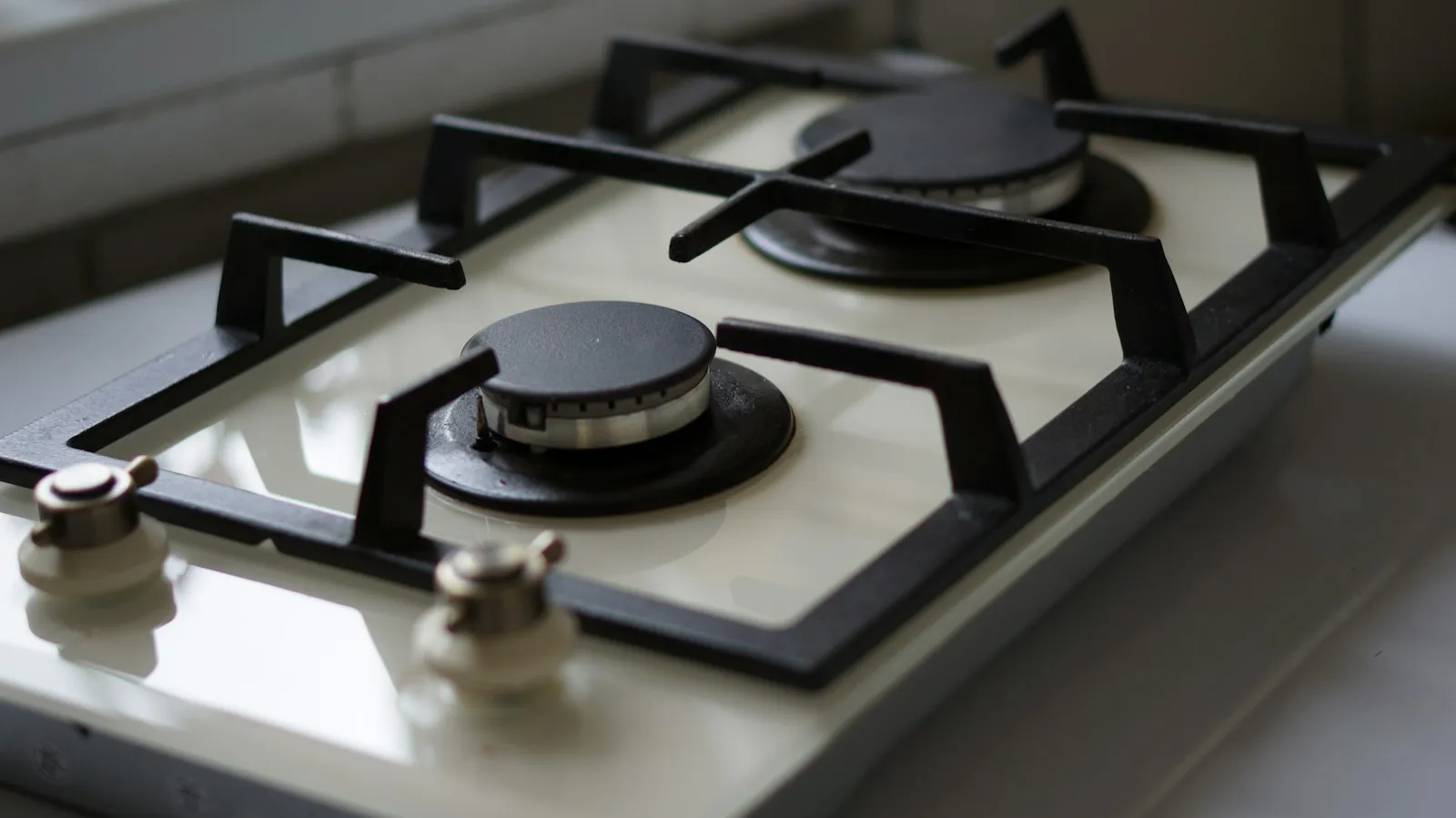
Most gas leaks in a house are small. A fitting loosens behind the dryer, a connector cracks behind the range or a valve near the water heater stops sealing. Small leaks still matter, because gas collects in closed rooms and a spark can ignite it. The good news is that a gas leak almost always gives you clues. Here is how to tell if you have one, and what to do about it.
If the smell is strong, stop reading and leave the house. Do not flip switches or use your phone inside. Once you are outside and away from the building, call 911 or your gas utility, then call a gas line pro for the repair.
1. A rotten egg or sulfur smell
Natural gas has no smell of its own. Gas utilities add an odorant called mercaptan so that people notice leaks, and it smells like rotten eggs or sulfur. SoCalGas and other utilities list this smell as the first sign of a leak.
Pay attention to where the smell is strongest. A smell that is stronger near the stove, the water heater, the furnace closet or the laundry hookup points to the appliance connection or the pipe feeding it. A smell that comes and goes in the same spot is a common sign of a small, steady leak at a fitting.
Keep in mind that some people have a weaker sense of smell, and the odor can fade in some conditions. Do not rely on smell alone if other signs are present.
2. A hissing or whistling sound
Gas escaping under pressure can make a faint hiss or whistle. You are most likely to hear it near an appliance connection, a shut-off valve or the meter. Turn off fans and the TV and listen closely. A hiss near a gas line is a reason to leave and call, even if you cannot smell anything.
3. Burner flames that look wrong
A healthy gas burner on a stove or water heater burns with a steady blue flame. Flames that turn yellow or orange, flicker, lift off the burner or make popping sounds can mean a problem with the gas supply or the air mix. This is not always a leak, but it means the appliance or its supply needs a check.
4. Dead plants or grass in a line
Buried gas lines run from the meter to the house in many homes, and sometimes out to a pool heater, a detached garage or a backyard kitchen. A leak underground pushes gas into the soil, where it can starve roots of oxygen. A strip of brown grass or dying plants along the path of a buried line is a classic sign. We cover this in detail on our underground gas line repair page.
5. Bubbles in wet soil or puddles
After rain or watering, look at puddles or wet soil near the meter or along a buried line. A steady stream of small bubbles rising through water can be gas escaping from below.
6. A gas bill that climbs for no reason
Gas bills rise in winter and fall in summer, and rates change. But if your usage climbs and nothing in the house has changed, gas may be escaping before it reaches your appliances. Compare the usage on your bill, not just the dollar amount, with the same month last year.
7. Headaches, dizziness or nausea at home
Breathing leaking gas can cause headaches, dizziness, nausea and fatigue. A gas appliance that is leaking or venting poorly can also produce carbon monoxide, which causes similar symptoms and can be deadly. The CDC carbon monoxide guidance recommends getting to fresh air right away and calling 911 if you suspect it. If symptoms ease when you leave the house and return when you come back, treat it as an emergency.
8. A dust cloud or mist near the ground
A larger outdoor leak can blow dirt or dust into the air, or create a small cloud or mist over wet ground. This is rare for small household leaks, but if you see it near a gas line, stay away from the area and call 911 or your gas utility.
What to do if you notice a sign
How you respond depends on how strong the signs are.
If the smell is strong, you hear hissing or anyone feels sick:
- Get everyone out of the house, including pets.
- Do not turn lights on or off, use a lighter, start a car in the garage or use a phone inside.
- Leave doors open on the way out if you can do it without delay.
- From a safe distance, call 911 or your gas utility.
- Once the utility has checked the meter side, call a gas line company for the repair.
If the smell is faint and comes and goes:
- Do not ignore it.
- Note where and when you notice it.
- Call a gas line pro and describe what you are seeing. They can help you decide whether it is safe to stay while they come out.
How a gas leak is confirmed
You do not have to find the leak yourself. A gas line pro confirms and locates leaks with three tools:
- An electronic gas detector, run along lines, fittings and appliance connections
- A bubble solution, brushed onto joints, which foams where gas escapes
- A pressure test, which closes off the gas system and watches a gauge for any drop
The pressure test is the most complete check. If the gauge holds steady, the system is tight. If it drops, there is a leak somewhere, and the detector and bubble test narrow it down. You can read more on our gas line pressure testing page.
Who fixes a gas leak in the house
Your gas utility is responsible for the meter and the line up to it. Everything after the meter, including the piping into your home and every appliance connection, belongs to you as the property owner. That is the part a gas line company repairs. Our guide on who to call for a natural gas leak explains the split in more detail.
Simple habits that prevent leaks
- Do not reuse old flexible connectors when you replace a stove or dryer.
- Be careful when pulling appliances away from the wall, since that strains the connection.
- Keep storage away from the water heater and furnace so nothing bumps the gas line.
- Have the gas system tested if your home is older and has never been checked, or before you buy a house.
If you live in Cerritos or a nearby city and notice any of these signs, our emergency gas leak repair team answers the phone 24 hours a day.